
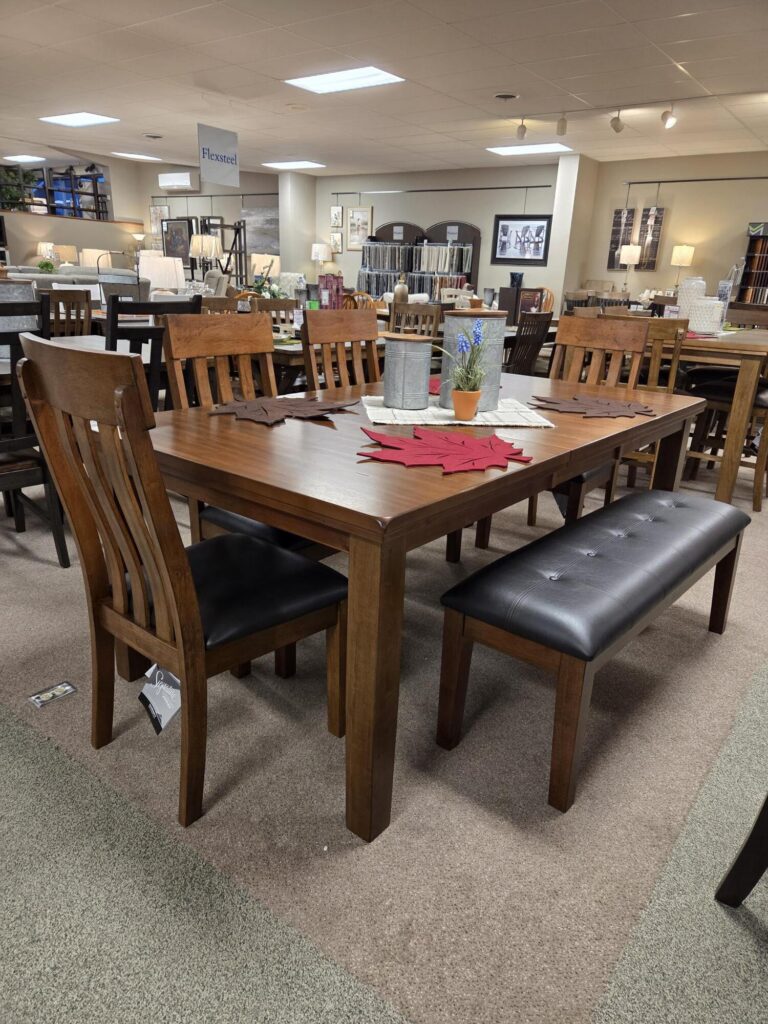
- Dining benches can seat several family members while maintaining an open look.
- Dining chairs offer back support and easier individual access.
- Combining benches and chairs gives families more seating flexibility.
For busy households, choosing a dining bench vs chairs comes down to how your family eats, gathers, and moves around the table. Both types of dining room seating can look inviting, but everyday comfort and available space should guide your decision.
When a Dining Bench Makes Sense
A dining bench works well for casual meals when children share a side of the table. Without individual chair backs, a bench can create an open appearance and may tuck beneath the tabletop when not in use. This can help in smaller dining spaces.
However, people seated in the middle may need others to move before getting up. Benches without backs may also feel less comfortable during long dinners. Counter-height benches can give you the same appearance and efficiency.
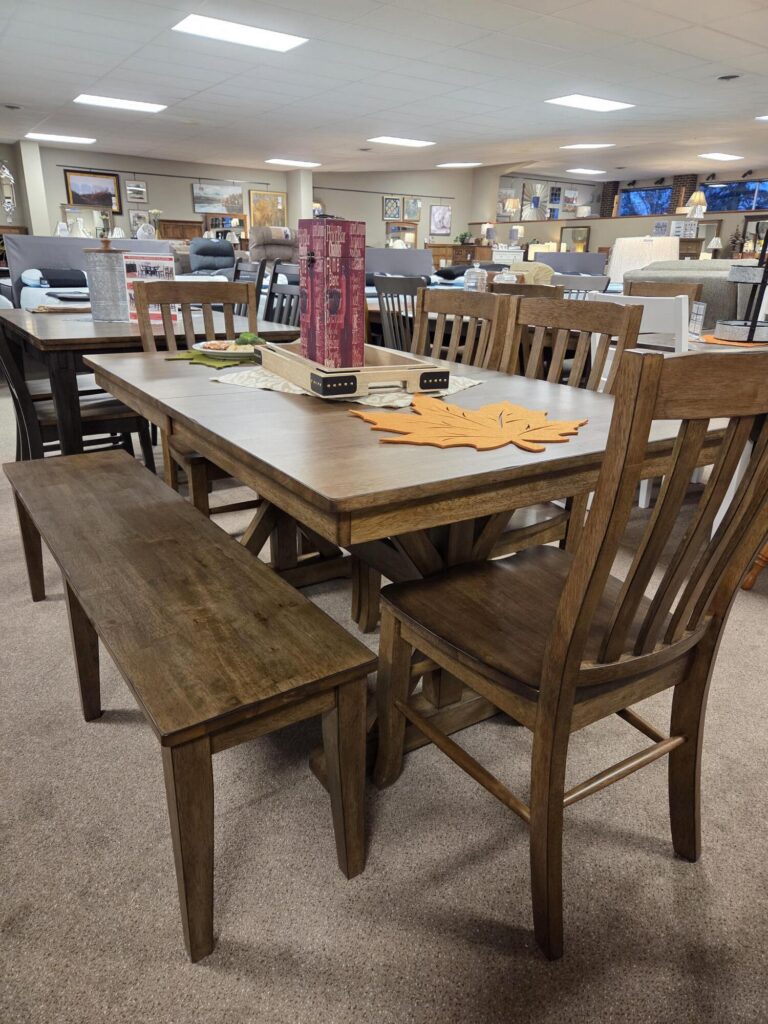
Why Dining Chairs May Be Better
Dining chairs give each person their own seat and, when designed with backs, added support. They are often easier to enter and exit individually, which matters when family members have different mobility needs.
The tradeoff is floor space. Multiple chairs need room to pull out, especially near walls.
Can You Combine Benches and Chairs?
Absolutely. Try a bench along one long side of a rectangular table, with chairs across from it and at the ends. This arrangement offers flexibility for different seating preferences.
Before buying dining room furniture, measure your table and the surrounding walking space. Check bench height, table legs, and how much room each person needs to sit comfortably.
Explore our dining furniture collection and contact us to discuss options for your family table at Uhlmann’s showroom in Williamsburg, Iowa.